Insider Threats In Corporate Facilities: How Security Teams Detect And Prevent Internal Risks.

This infographic highlights how corporate security teams identify and prevent insider threats through behavior monitoring, role-based access controls, employee reporting programs, and advanced surveillance technologies that help organizations detect internal risks and protect sensitive information and workplace operations.
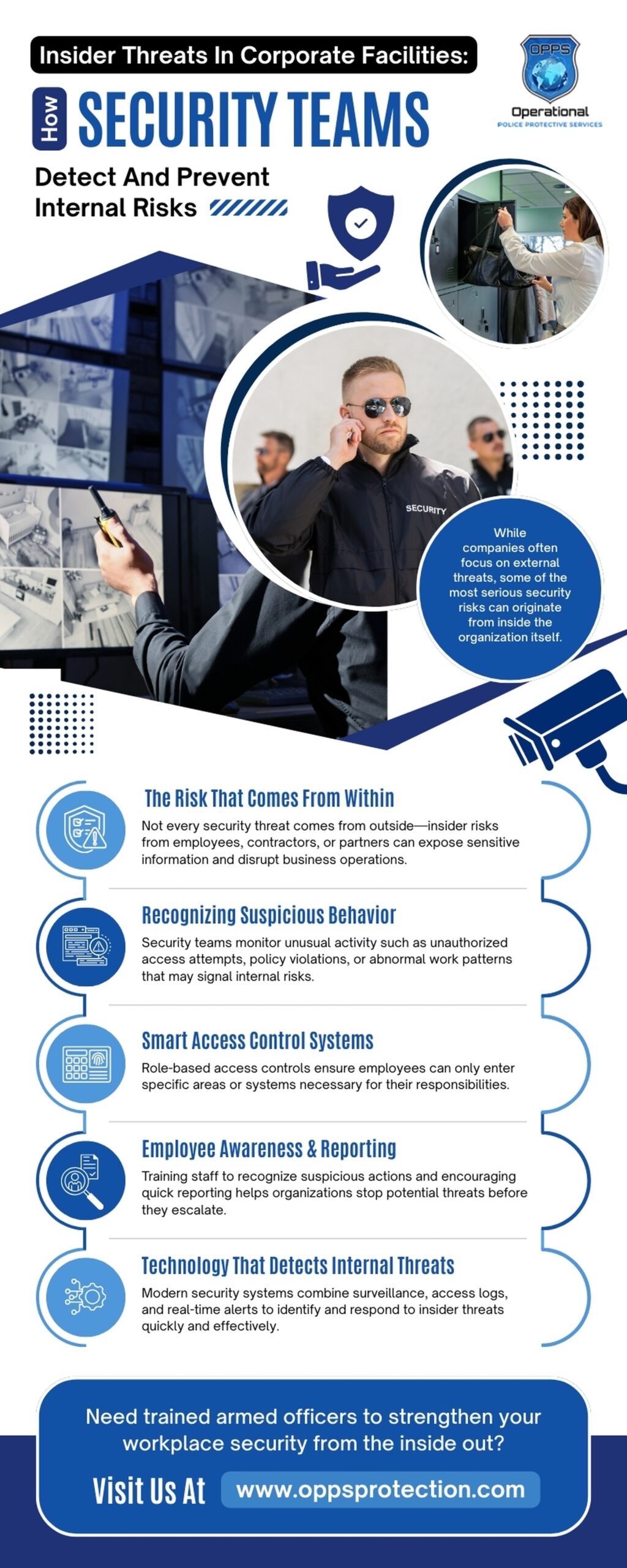

Infographic explaining how security teams detect and prevent insider threats in corporate facilities using surveillance, access control systems, suspicious behavior monitoring, employee awareness training, and real-time security technology to reduce internal risks and protect sensitive business operations.

Share This Story, Choose Your Platform!

Related Posts

A marked security SUV parked at night on a port facility with a large cargo ship docked in the background.

Some properties carry a risk profile that unarmed patrols simply weren’t built to handle. Ports, rail yards, fuel terminals, and industrial sites with high-value cargo or hazardous materials call for armed security guards trained specifically for that environment, not a generalist guard reassigned from a retail contract. What Makes a

Two black executive protection SUVs staged side by side in a parking lot ahead of a client detail.

A visible bodyguard standing behind a client is the version of executive protection services most people picture, but the real work happens long before that person ever steps into a room. A protective detail is built from threat assessments, advance planning, and route coordination that most clients never see, which

Uniformed off-duty police officers walk together near a recruitment truck outside a Baltimore stadium event.

When a retail chain gets hit by an organized theft ring, or a concert venue needs someone who can make an actual arrest if a fight breaks out, a standard guard working off a checklist usually isn’t enough. That’s why so many Maryland and Virginia businesses now hire off-duty police