HEPACO, LLC is a full-service environmental emergency response company holding OSRO certification (OSRO #32), CHEMNET contractor status, and a permanent operational presence in Baltimore, Maryland. HEPACO provides emergency spill response, containment, remediation, and cleanup services for oil and hazardous material releases, operating under the regulatory frameworks that govern environmental emergency response in the region.
When a hazardous material spill occurred at the Port of Baltimore, HEPACO was engaged to provide the environmental cleanup response. What made this incident operationally complex was the combination of three factors that compressed time, access, and safety margin simultaneously: the spill was inside the Port of Baltimore’s restricted access areas, requiring TWIC-compliant escort to move response personnel through secure terminal zones; the response was classified as an emergency, with the environmental containment clock running from the moment the spill was confirmed; and the weather conditions were severe, with an active snow storm creating hazardous travel and operational conditions across the response route and the port itself.
OPPS was engaged to provide the secured emergency escort that would get HEPACO’s response teams through the Port of Baltimore’s restricted areas legally, safely, and without delay, under conditions that tested every element of escort capability at once.
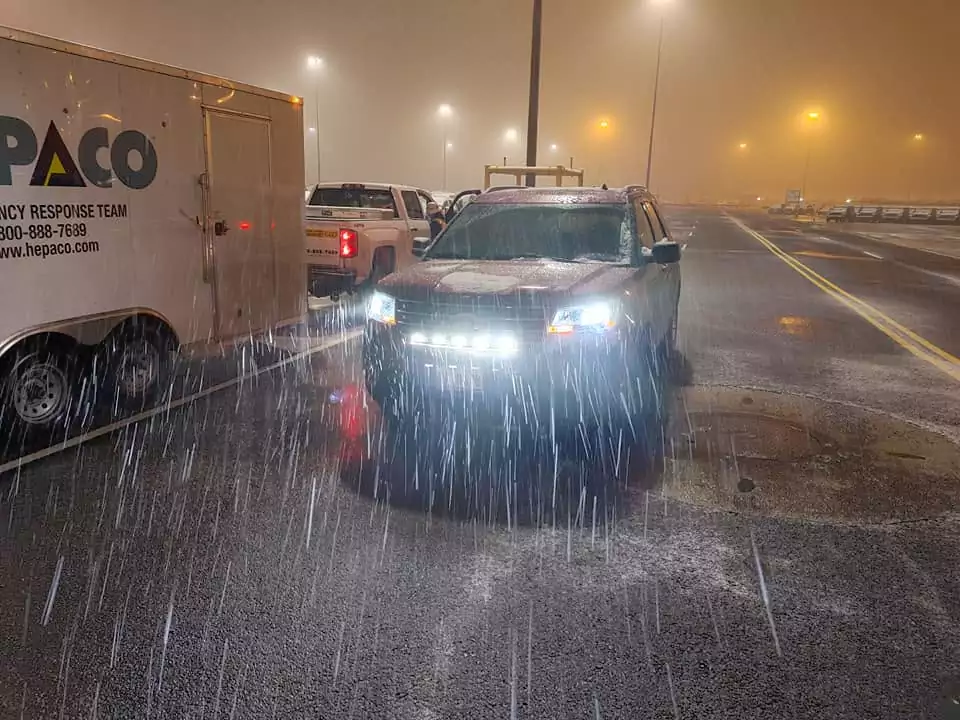
Emergency environmental escort into a restricted port facility during a snow storm compresses the normal escort planning process into the shortest possible window. Every decision that usually gets made in advance, route, credential verification, checkpoint procedures, and port contact coordination, has to happen in real time against a deteriorating weather environment and a spill that is not waiting.
The specific requirements of this engagement included:
For HEPACO’s response personnel and equipment through the Port of Baltimore’s restricted terminal areas, with all escort documentation and credential procedures executed to regulatory standard despite the emergency timeline
Managing the escort route and vehicle movement through the port in active winter storm conditions, where reduced visibility, reduced traction, and reduced port traffic all change the operational picture
Ensuring the escort route reached the spill location efficiently, with communication maintained between the escort team, the response crew, and port operational contacts throughout
Throughout with all escort movements keeping to the port’s road and gate infrastructure per the engagement’s compliance requirements
Operational Police Protective Services deployed TWIC-certified escort personnel to the Port of Baltimore to execute the secured emergency escort for HEPACO’s hazardous material response teams. The engagement ran from the initial escort pickup through access into the restricted areas and to the spill site, under the full compliance framework that port access requires.
The snow storm conditions required the escort team to manage the route actively rather than following a pre-planned path unchanged. Port access roads in winter conditions present genuine traction and visibility challenges for heavy response equipment, and our escort personnel kept the column moving safely while maintaining communication with port contacts and the HEPACO team throughout.
The TWIC compliance documentation and checkpoint procedures were executed to standard at every access point regardless of the emergency timeline and weather pressure. A restricted port area does not waive its credential requirements for an emergency, and the value of a TWIC-certified escort is precisely that it handles those requirements correctly under exactly the conditions where shortcuts are most tempting.
HEPACO’s response teams reached the spill site and began environmental cleanup operations. The escort engagement ended when the response teams were established at the site and no longer required escort supervision for their movement within the area.
Executed successfully into Port of Baltimore restricted areas under active snow storm conditions
Maintained throughout all checkpoint and restricted area entries on the emergency timeline
Reached the spill site and initiated environmental cleanup without access delay attributable to the escort operation
Managed safely with vehicle and personnel movement coordinated through active winter conditions across the port access route
Enabled by the secured escort, demonstrating OPPS’s capability for emergency deployment under compressed timelines and adverse conditions
Environmental emergency response has no margin for access problems. When HEPACO’s teams are staged and ready and the clock is running on a hazardous material spill, the escort that is supposed to get them inside has one job: do it correctly, do it fast, and do not create a compliance problem in the process.
OPPS brought TWIC certification, Port of Baltimore familiarity from daily escort operations, and the operational composure to execute a regulated access procedure in emergency conditions during a snow storm. That combination, compliance knowledge, local port presence, and performance under pressure, is exactly what emergency environmental response escort demands.