The Port of Baltimore is one of the busiest cargo hubs on the East Coast, moving containerized freight, heavy machinery, and specialized government cargo through a footprint that never fully slows down. Within that environment, SEKO Tech was managing the transfer of high-value military equipment through a restricted area ahead of its overseas shipment — a logistics operation where the cargo’s value, sensitivity, and destination made standard warehouse security insufficient for the task.
Restricted-area cargo of this kind presents a security profile unlike routine freight handling. The equipment’s classification meant limited personnel access, controlled staging areas, and a chain-of-custody standard that had to hold from the moment the equipment entered the secured zone until it was loaded for export. The margin for error was effectively zero: any gap in access control, any unaccounted movement, any lapse in coverage during staging or transfer created risk that a standard commercial security posture isn’t built to close.
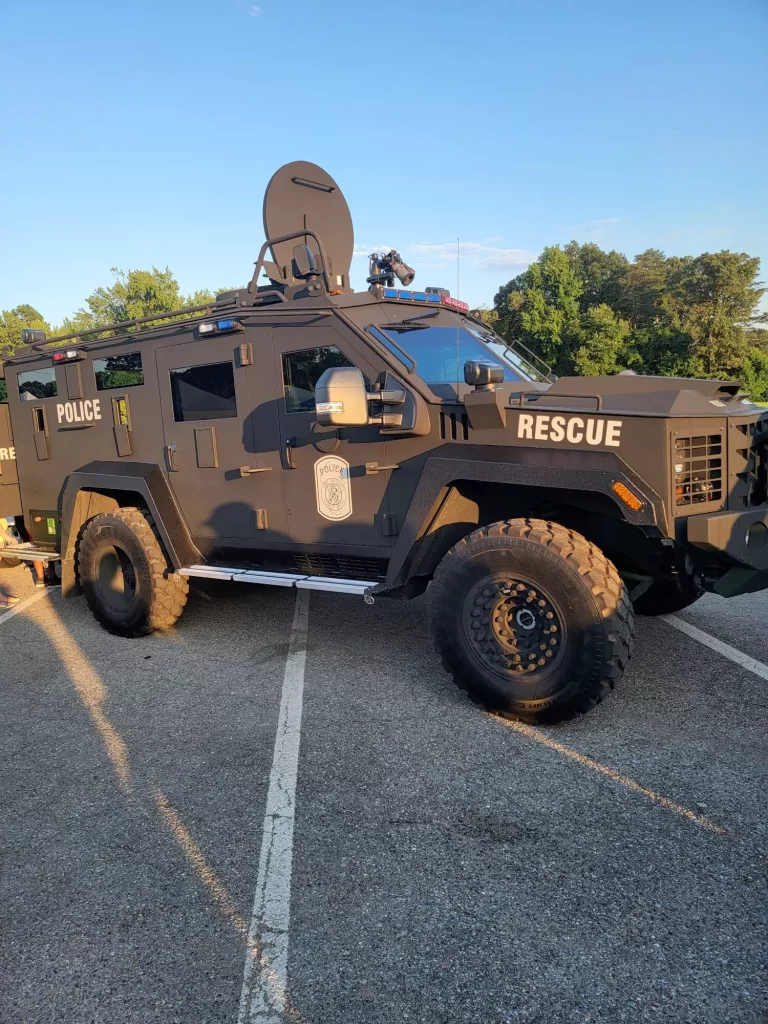
OPPS was engaged to secure the restricted area and protect the equipment throughout the staging and transfer process, working within SEKO Tech’s logistics timeline and the access requirements the shipment demanded.
Securing a restricted area holding high-value military equipment is a fundamentally different assignment than general site security. The requirements of this engagement included:
At the perimeter of the secured area, verifying every individual and vehicle entering or leaving the restricted zone against an approved credential list, with no exceptions made for familiarity or repeat presence
For the equipment itself during staging, holding, and pre-shipment handling, maintaining coverage through every phase where the equipment was present but not yet in transit
Ensuring the equipment’s location and handling could be accounted for at every point between arrival in the secured area and final loading
Integrating security operations with SEKO Tech’s handling schedule without slowing the transfer timeline or creating friction with the teams moving the equipment
Given the sensitivity of military equipment movement, limiting visibility into the operation to only the personnel who require it
Professional presence, establishing a security posture that discouraged any attempt at unauthorized access or interference before it could develop
Operational Police Protective Services deployed armed security personnel to establish and maintain a secured perimeter around the restricted area for the duration of the staging and transfer operation. The deployment was built around a single priority: an unbroken chain of accountability for the equipment from the moment it entered OPPS’s coverage until it left the secured zone for shipment.
Access control was managed at fixed checkpoints with a verified credential list, and every entry and exit was logged. This isn’t a formality in an operation like this — it’s the mechanism that makes chain-of-custody verifiable after the fact, which matters as much to SEKO Tech’s own compliance obligations as it does to the physical security of the equipment itself.
Coverage extended through every phase of the operation rather than a single fixed window. Equipment staging, holding periods, and the final transfer to shipment all carried the same level of attention, because the risk profile doesn’t shrink during the quieter parts of a logistics timeline; it just becomes easier to underestimate. OPPS personnel treated the holding period with the same seriousness as the active transfer itself.
Working within a restricted government-adjacent cargo environment also means working within an information discipline that’s different from a public event or a commercial site. Our officers coordinated directly with SEKO Tech’s logistics team, kept the operational footprint tight, and limited what was visible or discussed to only what the assignment required. Personnel with law enforcement and military backgrounds bring an instinct for that kind of discretion — it isn’t something that has to be taught into a deployment, it’s part of what our officers already carry into the role. The result was a security operation that moved at the pace the shipment required, without ever treating speed as a reason to relax the standard.
Delivered across the entire staging and transfer window, from initial arrival in the restricted area through final loading for overseas shipment
Maintained at the secured perimeter, with a complete, accountable record of entry and exit throughout the operation
For the high-value equipment across every phase of handling, with no unaccounted movement or access
Operation executed without delay to the shipment timeline
Across the full duration of the engagement
Established for future high-value and restricted-area logistics security needs
SEKO Tech needed a security provider capable of operating inside a restricted, high-sensitivity cargo environment without becoming an obstacle to the logistics operation itself, a partner that understood both the physical security requirements and the discretion the assignment demanded.
OPPS brings a personnel base built from federal, state, and local law enforcement, along with active and former military backgrounds, which matters directly in an engagement like this one. Officers who have already operated in controlled-access and classified-adjacent environments understand what chain-of-custody actually requires, not just in theory but in the daily discipline of logging every entry, verifying every credential, and treating a quiet holding period with the same rigor as an active transfer.
That background is what allows OPPS to secure a restricted area holding military equipment without turning the operation into a spectacle. The security presence was substantial and uncompromising where it needed to be, and invisible everywhere else, which is exactly what an operation built around discretion and asset integrity requires.
Contact Operational Police Protective Services for a free event security assessment.